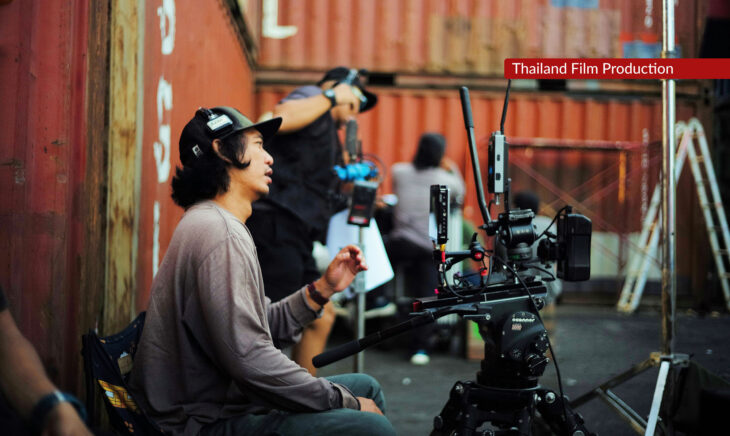
Foreign crews spent a record ฿7.51 billion in the country in nine months. The rebate that helped draw them is now under review, and the permits, contracts and evidence behind each shoot matter more than ever.
On 4 October, the government announced a number that would have sounded implausible five years ago. Between January and September 2026, 423 foreign productions applied to shoot in Thailand, with a combined spend of ฿7.51 billion. It is the highest nine-month figure on record.
For perspective, all of 2025 produced ฿7.717 billion across 546 productions. This year has already reached about 97% of that total with a quarter still to run. The Department of Tourism expects the full-year figure to land between ฿8 billion and ฿10 billion.
Thailand has long been a backdrop for other people’s stories. These numbers suggest it is becoming something more durable: a production base that international studios, advertisers and formats plan around. That shift brings opportunity, and it brings legal questions that are easy to underestimate until a shoot is under way.
A boom with a different shape
The headline figure hides a more interesting picture.
The third quarter did a lot of the work. The first half of the year brought ฿4.025 billion from 302 productions. That leaves roughly ฿3.485 billion from 121 productions in July, August and September alone. The pace picked up as the year went on.
Value and volume tell different stories. The United States leads on spend, with 38 productions worth ฿2.379 billion. The United Kingdom is second at ฿1.679 billion across 27 productions, up from just ฿230 million at the half-year mark, which suggests a few large productions landed in the summer. China files the most projects (52) but at a modest ฿253 million in total, and India follows with 44. A single Finnish production accounted for ฿448 million.
The type of production matters more than the count. In the first half, 152 commercials delivered ฿710 million, an average of under ฿5 million each. Twenty-two game shows and reality formats brought ฿811 million, around ฿37 million apiece. Twenty-one feature films brought ฿1.989 billion, nearly ฿95 million each. A permit application for an advertisement and one for a feature film are very different legal exercises, even though both count as “one production”.
One caution on the numbers: they track productions that applied for filming permission, so they are best read as a measure of declared activity rather than audited spend.
The rebate is a compliance exercise, not a cheque
Much of the attraction is the Thailand Film Office’s cash rebate, which can reach 30% of qualifying Thai spend. It is worth reading the criteria closely, because the rebate is earned condition by condition.
The Film Office’s published criteria set a base rebate on qualifying Thai spend starting from ฿50 million, with additional percentages for higher spending tiers. Further bonuses are available for employing Thai nationals in key positions (a production needs at least 30 points drawn from roles such as director, lead actor and cinematographer), for promoting Thai tourism and soft power (for example, showing Thai attractions in at least five scenes), for filming in designated provinces (at least a quarter of the shooting period), and for completing post-production in Thailand (at least 15% of eligible spend).
Each of those conditions has to be planned, contracted and evidenced. A key-role hire that isn’t properly documented, or a post-production budget that falls just short of the threshold, can cost a production real money. That is a contracts and records problem as much as a finance one.
The review hanging over the rebate
On 14 July, the Deputy Prime Minister and Commerce Minister announced a review of the rebate, after meetings with executives from the Motion Picture Association. The Prime Minister had asked for a reassessment to make sure public support for overseas productions delivers the greatest possible return for Thailand.
The stated direction is a shift away from simply reimbursing production spend, and toward creating jobs, employing Thai crews and keeping more economic value in the country. A redesigned scheme could reward productions that hire more Thai workers and direct a bigger share of their budgets to domestic suppliers.
No timetable has been given for the review, and no changes to rates, thresholds or eligibility have been announced. For producers, the practical point is simple: a budget that assumes today’s rebate terms is a budget with a risk attached. Contracts signed now should be drafted with the possibility of change in mind.
What every shoot has to get right
Beyond the incentive, every foreign production needs a film permit from the Thailand Film Office, and applications go through a locally registered coordinator. Processing takes up to three business days for advertising, documentaries, music videos and TV programmes, and up to ten for feature films, series and fiction.
The application covers the script, the filming schedule and locations, and a full list of foreign crew with passport details and arrival dates. Crew entering to work generally need a non-immigrant “M” visa, and a work permit unless their working period is 15 days or less. Sensitive locations such as government buildings, historical sites and national parks can require additional permits.
Content is part of the picture too. Scripts must avoid material affecting national security, public order, good morals, the environment or the dignity of the Thai nation, and a monitoring officer checks that what is filmed matches what was approved. Productions that treat the script as a creative document only, and discover its regulatory side halfway through the schedule, are the ones that run into delays.
Where the legal work sits
This is where our Sports & Entertainment practice comes in. Film production is at the heart of our entertainment work. We advise production companies, production service companies, producers, directors, talent and other industry professionals across the full production lifecycle: development and pre-production, filming, post-production, distribution and the ongoing exploitation of rights.
A foreign production arriving in Thailand sits on a web of relationships. There is an overseas producer or studio, a local production service company, foreign talent, Thai crew, locations and suppliers, all working to the same schedule. We advise production service companies and international producers on the framework that holds this together: production service agreements, client contracts, supplier and vendor agreements, location agreements, talent and crew engagements, confidentiality and intellectual property, and the work permits and other local requirements that come with bringing foreign companies, artists and production personnel into the market. Clear responsibilities, payment terms, liability and risk allocation are what keep a shoot moving when something changes at short notice.
Those agreements matter even more with an incentive in play. The rebate rewards Thai key-role hires, local post-production and filming in designated provinces, and each of those conditions is ultimately documented in a contract or an invoice. It is far easier to get that paperwork right at the start than to reconstruct it later.
The same approach applies well beyond film. We also advise on advertising and commercial productions, branded content, music videos and digital content, where timelines are compressed and rights need to be defined precisely. We act for event organisers, promoters, artists, venues and brands on live events and performances, including talent, sponsorship, venue and supplier agreements. And we advise athletes, clubs, sponsors and organisers on the contracts behind sporting careers, partnerships and events. Game shows, streamed formats and live entertainment sit across all of these lines, and the boundary between production, broadcast and licensing is rarely as clean as it looks on paper.
Production does not stop because a contract needs to be negotiated. Legal questions often arise days, or sometimes hours, before a project has to move, so our approach is practical and commercially minded: identify problems early, explain the implications clearly, and give advice that lets clients decide quickly. Where a project crosses borders, we combine local legal knowledge with an international perspective, and can draw on the wider Alliott Global Alliance network when matters extend across jurisdictions.
What to do now
For anyone planning to shoot in Thailand in the coming months, three questions are worth asking before the cameras roll.
First, which rebate conditions are we relying on, and who is responsible for evidencing each one? Second, do our contracts allow for a change in rebate terms if the review concludes mid-project? Third, has the script been tested against the permit conditions, not just the creative brief?
If the honest answer to any of them is “we’re not sure”, that is the moment to talk to us. A short review at the planning stage is usually far cheaper than fixing a problem mid-shoot, and it is the kind of practical, early guidance our team is here to give.
Thailand’s production boom is real, and it is likely to continue. Every production that shoots here is also a tourism advertisement the country did not have to buy. The ones that benefit most will be the ones that treat the legal groundwork as part of the production plan from day one.
If you are planning a shoot in Thailand, or want to understand how the rebate review could affect your budget, contact the GPS Legal Sports & Entertainment team.
This article is general information, not legal advice.